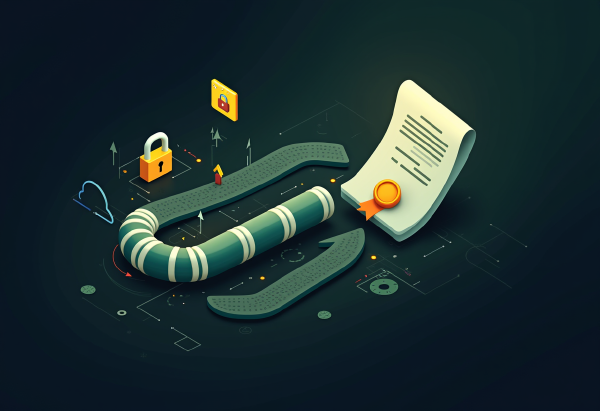
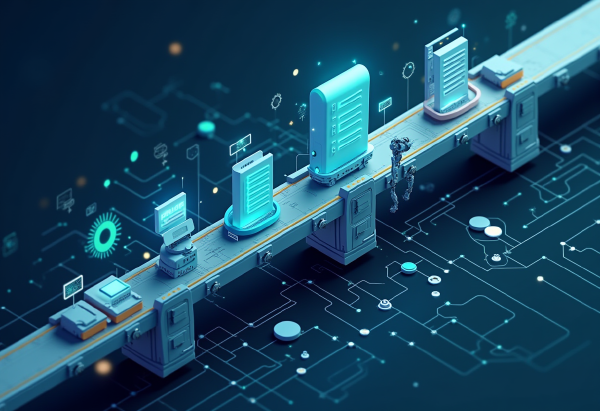
The Problem # My PAN-OS firewall (GlobalProtect VPN portal at vpn.mareoxlan.com) needs a valid TLS certificate. I had a dedicated LXC (30122) running acme.sh with a Cloudflare DNS-01 challenge to issue a wildcard cert, then a PAN-OS deploy hook to push it to the firewall via the XML API. It worked, but it was a single-purpose VM doing the same job my Caddy reverse proxy already does – Caddy auto-renews *.mareoxlan.com via the same Cloudflare DNS-01 mechanism.
Automation is the backbone of my homelab. This wiki covers the tools, patterns, and workflows that keep 50+ services running with minimal manual intervention.
Automation Stack # n8n Workflow Automation # n8n is my primary workflow automation platform—think Zapier/Make but self-hosted with full code access.
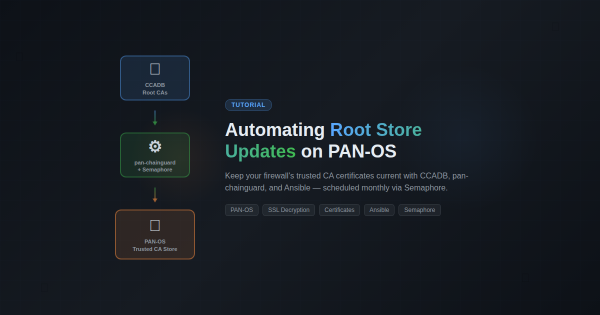
Overview # If you’re running SSL decryption on a Palo Alto firewall, you’ve probably hit this: a user reports they can’t access a website, and it turns out the site’s CA certificate isn’t in your firewall’s trusted root store. PAN-OS only updates its built-in root store on major software releases, which means between upgrades your firewall’s trust anchors slowly go stale.
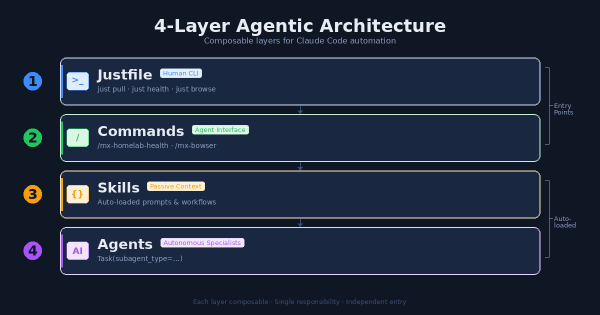
The Problem # After months of building Claude Code extensions (agents, skills, commands, hooks, MCP servers) I had a growing collection of powerful tools with no coherent entry point. Want to pull all repos? Run a shell script. Want to check infrastructure health? Ask Claude and hope it knows which command to use. Want to automate a browser task? Figure out whether to use the MCP plugin or write a script.
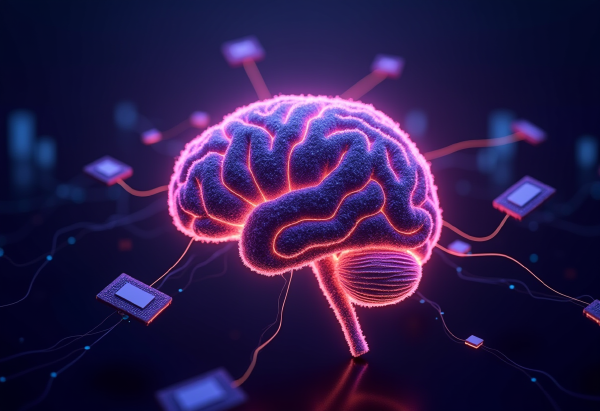
The Goal # Turn Claude Code from a stateless coding assistant into a persistent personal assistant — a second brain that remembers context across sessions, learns from daily work, and can semantically search past knowledge.
Inspired by Hermes’s personalization architecture, adapted for Claude Code’s native capabilities.
Hermes’s Approach (The Model) # Hermes creates personalization through:
The Challenge # I’ve been running a homelab for years, constantly deploying new services, debugging issues, and learning from mistakes. Every time I solve a particularly gnarly problem or build something interesting, I think, “I should write this up.” And then I don’t.
The friction is real. By the time I finish a project—maybe deploying Wazuh XDR or migrating from Watchtower to WUD—I’m mentally done. The last thing I want to do is sit down and reconstruct what I did, sanitize my internal network details for public consumption, and format everything into a proper blog post. The motivation is there when I’m in the middle of solving a problem, but it evaporates the moment I’m done.
Update, September 2026. Neither Watchtower nor WUD is the current update controller. Both were fully decommissioned in March 2026 after update-related outages; container updates are now Semaphore-managed (safe-update.sh, health-gated with soak and auto-rollback). This post is preserved as the historical migration account — including its NetBox dashboard walk-through, which reflects the IPAM tool of that era, not a current deployment.
The Problem # Watchtower had been my go-to for automatic Docker container updates across 8+ services. It worked… mostly. But I kept running into issues:
Overview # This site uses a hybrid content structure that combines the best of wikis and blogs. Instead of choosing between “everything chronological” or “everything by topic,” we get both:
Wiki sections for evergreen reference content (organized by topic) Blog posts for journey updates and lessons learned (organized by date) Tutorials for step-by-step guides (standalone, searchable) Series for multi-part deep dives (linked learning paths) Content Architecture #